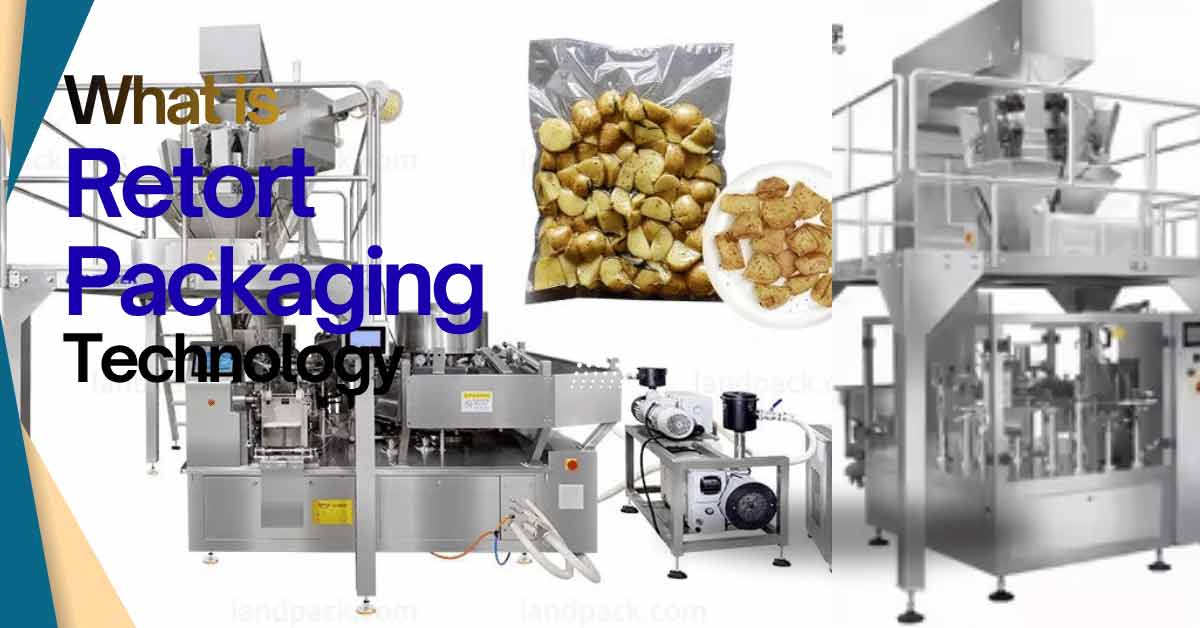
Retort packaging technology is a modern food packaging method that allows ready-to-eat meals, soups, sauces, and other perishable items to be safely stored for long periods without refrigeration or preservatives.
It involves sealing food in heat-resistant pouches, trays, or containers, then sterilizing them under high temperature and pressure—usually at around 121°C (250°F)—inside a retort (autoclave). This process kills harmful microorganisms while retaining the flavor, texture, and nutritional value of the food.
Let’s break it down in simple terms 👇
Definition of Retort Packaging Technology
Retort packaging technology refers to the process of sterilizing food after it has been sealed in its final package. The package, known as a retort pouch, is made of laminated layers of plastic and aluminum foil that can withstand high heat and pressure.
These pouches or containers replace traditional tin cans and glass jars used in canning. The result? Lightweight, durable, shelf-stable packaging that keeps food fresh for 6 months to 2 years without refrigeration.
How Retort Packaging Works
Here’s how the process works step by step:
- Filling: Food is prepared and filled into a retort pouch, tray, or container.
- Sealing: The package is hermetically sealed (airtight).
- Retorting (Sterilization): The sealed packages are placed in a retort machine (autoclave) where they are heated to around 121°C (250°F) under pressure.
- Cooling: The packages are quickly cooled with cold water to stop the cooking process.
- Inspection: Finally, packages are checked for seal integrity and quality before distribution.
This combination of heat, pressure, and sealed packaging ensures the destruction of bacteria, spores, and enzymes that could spoil the food.
Materials Used in Retort Packaging
Retort pouches are made of multiple laminated layers, each serving a specific purpose:
| Layer | Material | Function |
|---|---|---|
| Outer layer | Polyester (PET) | Provides strength, printability, and temperature resistance |
| Middle layer | Aluminum foil | Acts as a barrier to light, oxygen, and moisture |
| Inner layer | Polypropylene (PP) | Heat-sealable layer that contacts the food |
These materials work together to maintain product safety and shelf stability even after heat treatment.
Applications of Retort Packaging
Retort packaging technology is widely used for:
- Ready-to-eat meals (curries, rice, pasta, soups)
- Pet foods
- Seafood and meat products
- Vegetables and legumes
- Baby foods and sauces
- Military and camping rations
It’s popular because it keeps food safe, tasty, and portable — ideal for modern lifestyles.
Advantages of Retort Packaging Technology
✅ Long shelf life (6–24 months without refrigeration)
✅ Lightweight and compact compared to cans and jars
✅ Better flavor and nutrition retention
✅ Reduced transportation and storage costs
✅ Microwave-compatible pouches for consumer convenience
✅ Eco-friendly – uses less material and energy than traditional canning
Disadvantages
However, there are some limitations:
❌ Initial setup cost for retort machinery is high
❌ Packaging materials must withstand high temperatures
❌ Limited recyclability due to multi-layer structures
❌ Requires careful process control to ensure safety and quality
Industries Using Retort Packaging
Retort packaging technology is heavily adopted in:
- Food & Beverage
- Pharmaceuticals
- Defense and Aerospace (for field rations)
- Pet Food Manufacturing
Difference Between Retort Packaging and Aseptic Packaging
| Feature | Retort Packaging | Aseptic Packaging |
|---|---|---|
| Sterilization method | Product and package sterilized together | Product and package sterilized separately |
| Temperature exposure | Higher (up to 121°C) | Lower (85–95°C) |
| Shelf life | 6–24 months | 6–12 months |
| Example | Ready-to-eat meals | Milk, juice, soups |
Sustainability and Innovations
Modern advances in retort packaging focus on sustainable materials, such as mono-material pouches and recyclable laminates. Companies are also using digital printing and smart labels for traceability and consumer engagement.
If you’re a food manufacturer or brand owner, check out Discount Box Printing’s custom food packaging solutions — they offer innovative, high-quality custom box printing and pouch packaging services that can be tailored for retort-ready products.
Also, you can explore industry resources like Packaging Digest and Food Processing Technology for up-to-date trends on retort and thermal packaging innovations.
Future of Retort Packaging Technology
The future is moving toward:
- Eco-friendly retort pouches made from recyclable polymers
- Smart sensors that track freshness
- Improved digital printing for brand personalization
- Automated retort systems for efficiency and consistency
As technology advances, retort packaging will become even more sustainable, intelligent, and cost-effective.